When Traffic Soars but Revenue Crawls
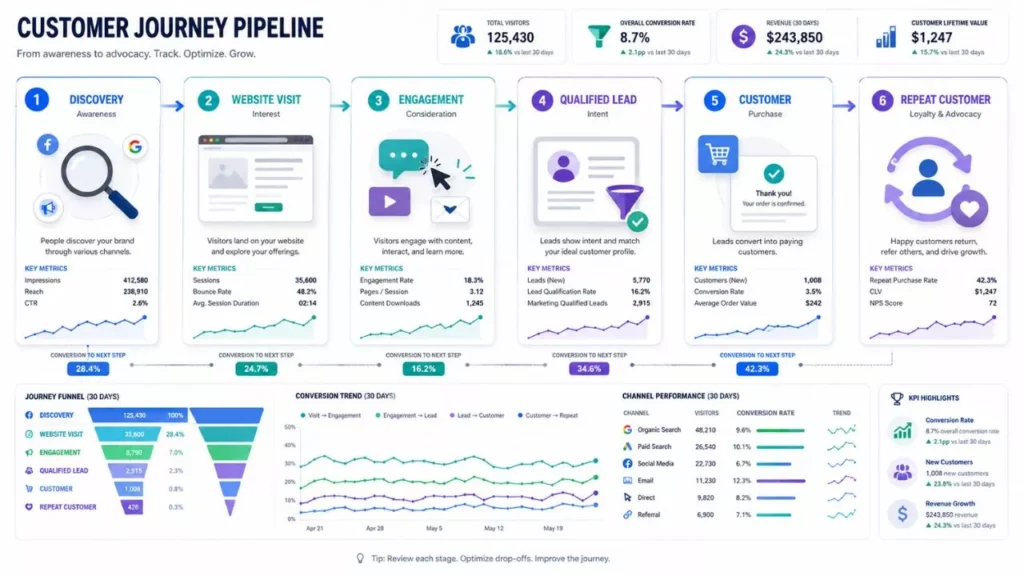
If your site is buzzing yet sales are snoozing, odds are your marketing and sales funnels aren’t in sync. We throw around “Marketing Funnel vs. Sales Funnel” in meetings, on LinkedIn, over lattes—yet plenty of teams still blur the two. Quick cheat sheet:
- Marketing funnel: Attracts and nurtures strangers until they’re curious enough to talk.
- Sales funnel: Qualifies that curiosity and turns it into signed deals.
Know the difference, and you’ll hand off leads smoothly, keep your pipeline healthy, and make customers happier.
A Quick History Lesson
The funnel idea isn’t new. Back in 1898, the AIDA model—Attention, Interest, Desire, Action—was born. Fast-forward to 2025 and the funnel now covers everything from TikTok swipes to chatbot chats. Same goal, though: move people from “Who are you?” to “Take my money” with as little friction as possible.
What a Marketing Funnel Really Does
| Stage | Tactics | Sample Metrics |
|---|---|---|
| Awareness | SEO, social posts, PR buzz | Impressions, clicks |
| Interest | Blogs, how-to videos, newsletters | Time on page, email opens |
| Consideration | Case studies, comparison guides | MQLs, download rates |
Marketing owns the early game—sparking curiosity and nurturing it until prospects raise a hand.
Inside the Sales Funnel
| Stage | Your Playbook | Key Metrics |
|---|---|---|
| Intent | Demo requests, pricing page visits | SQL volume |
| Evaluation | Discovery calls, tailored proposals | Deal velocity |
| Decision | Objection busting, contract sent | Win rate |
| Post-Purchase | Onboarding, QBRs, upsells | LTV, churn |
Sales steps in once interest peaks, turning “maybe” into “where do I sign?”
How Marketing Fills the Top
- SEO power pages for steady traffic
- Hyper-targeted ads that hit pain points fast
- Podcasts & webinars that build authority and email lists
Transition phrases—for example, in addition, on the other hand—link these touches into a story that feels seamless.
How Sales Closes the Bottom
- Prospecting: Score leads so reps chase the best fits.
- Relationship building: Consultative questions uncover real pain.
- Proposal & negotiation: ROI calculators beat blanket discounts.
- Close & retain: Handle objections early, then wow them in onboarding.
A 5 % boost in retention? Bain & Co. says that can spike profits by up to 95 %. Worth the extra love.
Key Differences in One Glance
| Marketing Funnel | Sales Funnel | |
|---|---|---|
| Goal | Generate & warm leads | Convert & keep customers |
| Owner | Marketing team | Sales team |
| KPIs | CPL, MQLs, engagement | Win rate, ARR |
| Stage Span | Awareness → Consideration | Intent → Loyalty |
Where the Funnels Meet
The big hand-off is MQL → SQL. Agree on crystal-clear criteria (title + engagement score, for instance) and share dashboards so no lead slips through.
How to Make Both Funnels Sing
- Weekly “SMarketing” syncs — align campaigns with revenue targets.
- SLAs — marketing promises lead quality; sales promises quick follow-up.
- Feedback loops — closed-lost reasons feed future ads and content.
Tools That Keep Everyone Honest
HubSpot, Salesforce, a solid CDP, and multi-touch attribution. Automations ping reps, score leads, and surface bottlenecks before they become black holes.
Watch for These Leaks
- High CPL but few SQLs? Lead quality is off.
- Demos booked but no deals? Value messaging misses.
- Long stalls mid-funnel? You need a stronger internal champion or ROI proof.
Patch leaks with sharper targeting, tighter sales enablement, or faster follow-ups.
Beyond B2B vs. B2C
- B2B: Longer cycles, more decision-makers.
- B2C: Emotional hooks, lightning-fast checkouts.
Account-Based Marketing flips the funnel: start with dream accounts, then personalize everything.
Building a Funnel Dashboard
Top row: Traffic, CPL, MQLs
Middle: SQLs, demos, pipeline value
Bottom: Closed-won revenue, CLV, churn
Visualize all three rows and you can spot problems at a glance.
The Road Ahead
Think AI-written micro-content, predictive scoring, and privacy-first tracking. Get marketing and sales aligned early, and you’ll ride these waves—not wipe out.
The Big Takeaway
Marketing and sales funnels are two sides of the same revenue coin. Treat them separately to optimize; connect them to accelerate. When data, KPIs, and customer empathy flow freely between both teams, your buyers don’t feel pushed through a funnel—they feel guided on a journey from stranger to raving fan.