In today’s rapidly evolving digital landscape, businesses are continually seeking innovative strategies to engage customers and stay ahead of the competition. Artificial Intelligence (AI) and Machine Learning (ML) have emerged as transformative forces in digital marketing, offering unprecedented opportunities for personalization, efficiency, and data-driven decision-making. This article explores how AI and ML are reshaping digital marketing, providing practical examples and insights into their profound impact on the industry.
Enhancing Personalization in Marketing
Personalization has become a cornerstone of effective marketing strategies. AI and ML enable marketers to analyze vast amounts of customer data to deliver tailored content and experiences. By understanding individual preferences and behaviors, businesses can create personalized recommendations, emails, and advertisements that resonate with their audience. For instance, streaming services like Netflix utilize AI algorithms to suggest content based on user viewing history, enhancing user engagement and satisfaction.
Automating Marketing Processes
Automation streamlines repetitive tasks, allowing marketers to focus on strategic initiatives. AI-powered tools can automate email campaigns, social media postings, and customer segmentation, ensuring timely and relevant interactions. For example, AI-driven chatbots provide instant customer support, handling inquiries and guiding users through the sales funnel without human intervention. This not only improves efficiency but also enhances the customer experience by providing immediate assistance.
Leveraging Predictive Analytics
Predictive analytics involves using historical data to forecast future trends and behaviors. AI and ML algorithms analyze customer data to predict purchasing patterns, enabling marketers to anticipate needs and optimize campaigns accordingly. Retailers can use predictive analytics to manage inventory effectively, ensuring popular products are readily available, thereby increasing sales and customer satisfaction.
Improving Customer Segmentation
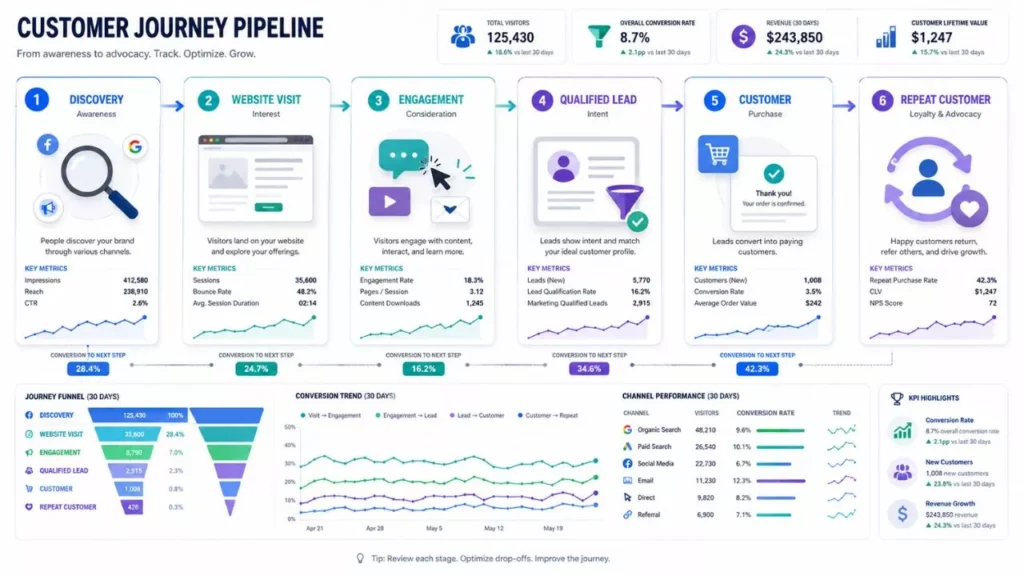
Effective customer segmentation allows businesses to target specific groups with tailored messages. AI analyzes demographic, behavioral, and psychographic data to identify distinct customer segments. This granular segmentation enables more precise targeting, leading to higher conversion rates. For example, e-commerce platforms can segment customers based on browsing behavior and purchase history to deliver personalized product recommendations.
Enhancing Content Creation and Optimization
AI-driven tools assist in generating and optimizing content by analyzing what resonates with target audiences. Natural Language Processing (NLP) algorithms can create blog posts, social media updates, and product descriptions that align with brand voice and audience preferences. Additionally, AI can optimize content for search engines by identifying relevant keywords and suggesting improvements, thereby enhancing visibility and engagement.
Optimizing Advertising Campaigns
AI and ML enhance advertising by optimizing ad placements, targeting, and bidding strategies. Programmatic advertising platforms use AI to analyze user data and deliver ads to the right audience at the optimal time, maximizing ROI. For instance, AI can adjust bids in real-time based on ad performance, ensuring budget efficiency and improved campaign outcomes.
Enhancing Customer Experience
AI-powered chatbots and virtual assistants provide 24/7 customer support, addressing inquiries and resolving issues promptly. This immediate assistance enhances customer satisfaction and loyalty. Moreover, AI analyzes customer feedback and sentiment, enabling businesses to make data-driven improvements to products and services, thereby fostering a customer-centric approach.
Conclusion
AI and machine learning are revolutionizing digital marketing by enabling personalization, automating processes, and providing predictive insights. These technologies empower businesses to engage customers more effectively, optimize campaigns, and enhance the overall customer experience. As AI continues to evolve, its integration into digital marketing strategies will become increasingly essential for businesses aiming to thrive in the competitive digital landscape. Embracing AI-driven tools and methodologies is not just an option but a necessity for marketers seeking to deliver value and achieve sustainable growth.