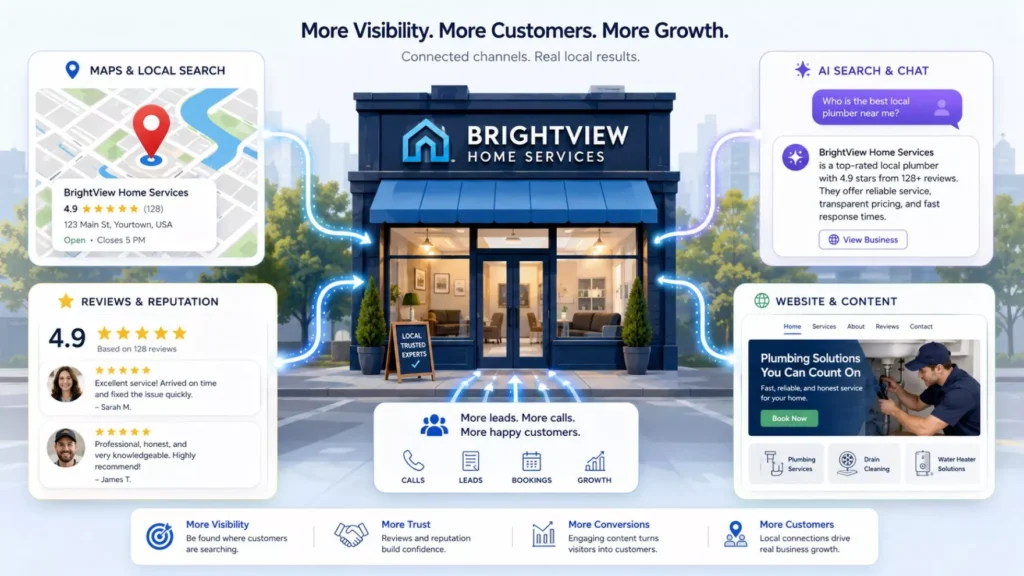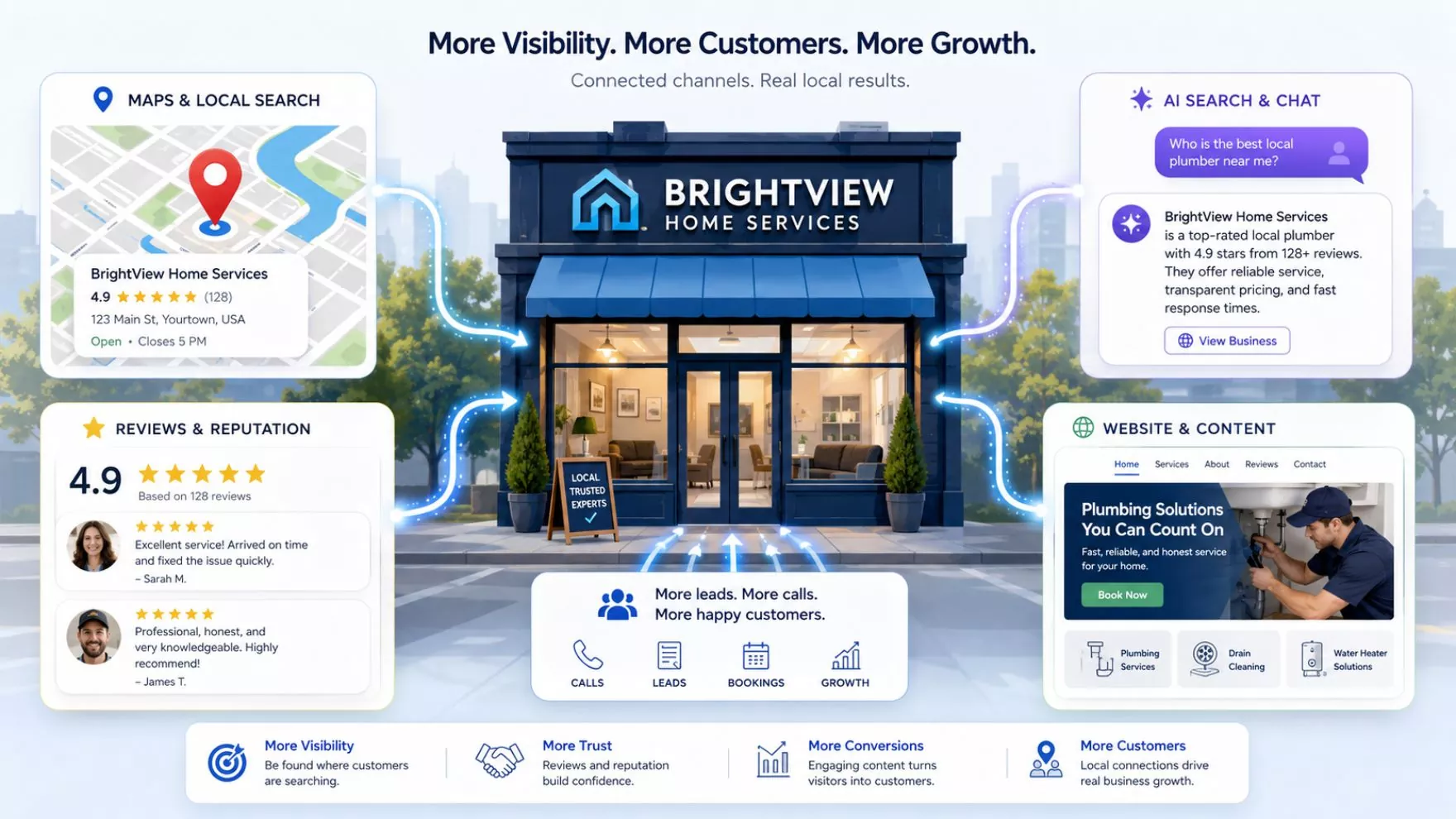
For service-based businesses, most customers come from a specific geographic area. Whether you run a plumbing company, landscaping business, law firm, home cleaning service, or marketing agency, attracting nearby customers is essential for sustainable growth.
Local lead generation is no longer limited to ranking in search engines. People now use AI assistants, maps, review platforms, and voice search to find trusted local providers. Creating clear, trustworthy, and location-focused content helps your business become easier to discover across these experiences.
This guide explains practical local lead generation ideas that can help service businesses attract qualified prospects while building long-term visibility.
What Is Local Lead Generation?
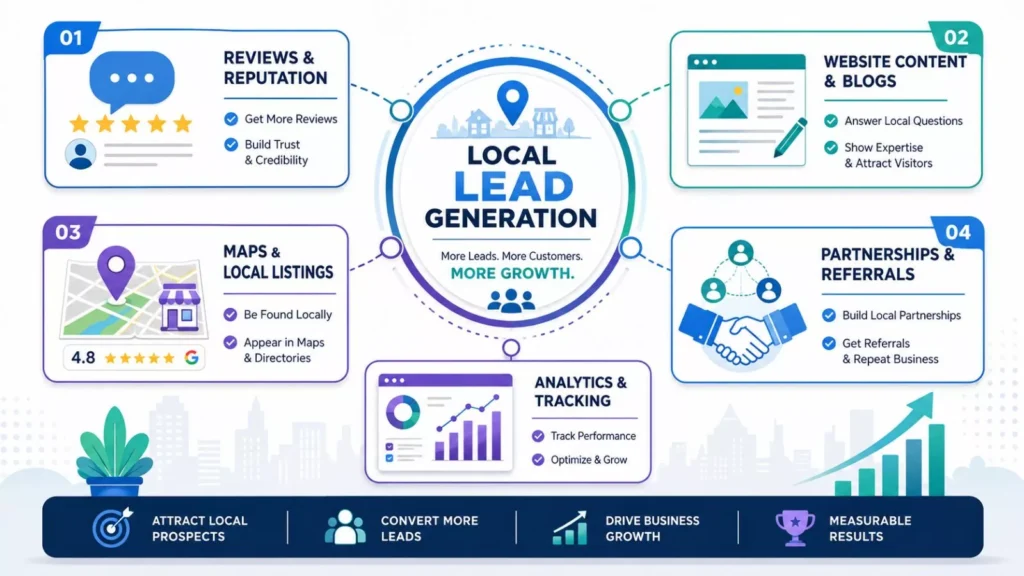
Local lead generation is the process of attracting potential customers within your service area who are interested in your products or services.
Unlike broad digital marketing, local lead generation focuses on connecting with people who are geographically close and more likely to become paying customers.
Successful local lead generation combines online visibility, reputation management, community engagement, and helpful content.
Why Local Leads Matter
Local prospects often have stronger purchase intent because they are actively searching for services in their area.
Benefits include:
- Higher-quality inquiries
- Shorter sales cycles
- Lower travel costs
- Better customer relationships
- Increased referrals and repeat business
A consistent local marketing strategy can also strengthen your reputation within the communities you serve.
12 Local Lead Generation Ideas
1. Optimize Your Business Profile
Claim and maintain your business listing on major map and local directory platforms. Ensure your business name, address, phone number, website, and business hours remain accurate and consistent.
2. Create Location-Specific Service Pages
Develop dedicated pages for each city or neighborhood you serve. Each page should provide unique information about your services, local experience, and frequently asked questions rather than repeating the same content.
3. Publish Helpful Local Content
Write articles that answer questions your local audience commonly asks.
Examples include:
- Seasonal maintenance tips
- Local regulations
- Service checklists
- Community-specific advice
- Cost considerations for your region
Helpful content improves trust while supporting both traditional search and AI-generated answers.
4. Encourage Customer Reviews
Positive reviews help potential customers evaluate your business.
Ask satisfied clients to leave honest feedback and respond professionally to reviews. Authentic reviews can strengthen credibility and influence purchasing decisions.
5. Build Local Partnerships
Collaborate with complementary businesses, community organizations, or local events.
These relationships can increase referrals and expand your reach within your target market.
6. Answer Frequently Asked Questions
Create FAQ pages that address common customer concerns such as pricing factors, scheduling, service areas, or preparation before appointments.
Clear answers make your content more useful for readers and easier for AI systems to interpret.
7. Showcase Real Projects
Publish case studies, before-and-after examples, or project summaries that demonstrate your work while respecting customer privacy.
Include relevant details about the services provided and the outcomes achieved.
8. Use Clear Calls to Action
Every important page should guide visitors toward the next step, whether that’s requesting a quote, scheduling a consultation, or contacting your team.
Make contact information easy to find on every page.
9. Participate in Your Community
Sponsor local events, support charities, or join business associations where appropriate.
Community involvement can increase brand recognition and create opportunities for referrals.
10. Maintain Accurate Business Information
Keep your business details consistent across your website, local directories, and social platforms.
Accurate information helps customers and search systems understand your business.
11. Create Comparison and Educational Guides
Content such as “repair vs. replacement,” “how to choose a contractor,” or “questions to ask before hiring” helps educate prospects before they make a purchasing decision.
12. Keep Content Updated
Review important pages regularly to ensure service offerings, pricing information (when shared), business hours, and contact details remain current.
Fresh, accurate content provides a better experience for users and supports long-term visibility.
Measuring Local Lead Generation Success
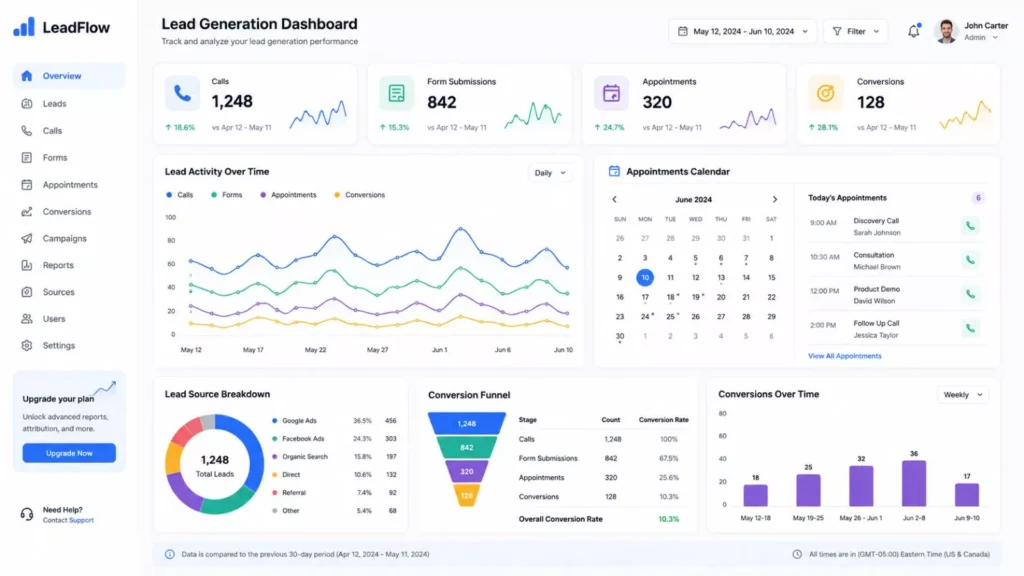
Monitor metrics that align with your business goals, including:
- Qualified inquiries
- Phone calls
- Contact form submissions
- Appointment requests
- Conversion rates
- Customer acquisition cost
- Repeat customers
- Referral sources
Rather than focusing on a single metric, evaluate performance across multiple channels to understand which strategies deliver the most valuable leads.
Common Local Lead Generation Mistakes
Avoid these common issues:
- Creating duplicate location pages
- Publishing thin or generic content
- Ignoring customer reviews
- Using inconsistent business information
- Neglecting mobile usability
- Failing to update outdated content
- Writing only for search engines instead of real customers
Successful local lead generation prioritizes trust, clarity, and user experience.
Frequently Asked Questions
What is local lead generation?
Local lead generation is the process of attracting potential customers within a specific geographic area who are interested in your services.
Which businesses benefit most from local lead generation?
Home service providers, healthcare practices, legal firms, consultants, contractors, agencies, and other businesses that primarily serve customers within defined locations.
Is local SEO the same as local lead generation?
No. Local SEO focuses on improving online visibility, while local lead generation includes SEO alongside reviews, referrals, partnerships, advertising, and customer engagement.
How long does local lead generation take?
Results vary depending on competition, existing visibility, and marketing activities. Consistent effort over time generally produces stronger outcomes than short-term campaigns.
Can small businesses compete with larger companies?
Yes. Smaller businesses can compete by providing helpful local content, maintaining accurate business information, earning authentic reviews, and delivering excellent customer experiences.
Why is GEO important for local businesses?
Generative Engine Optimization (GEO) helps create clear, well-structured, trustworthy content that AI-powered search experiences can understand and reference, complementing traditional SEO.
Conclusion
Effective local lead generation combines helpful content, strong local visibility, customer trust, and consistent engagement with your community. As people increasingly use AI assistants alongside traditional search engines, businesses should create content that is easy to understand, well organized, and genuinely useful.
By implementing these ideas and regularly refining your strategy, your service-based business can improve visibility, attract more qualified local prospects, and build stronger relationships with nearby customers.