In the world of digital marketing, driving higher conversions is the ultimate goal. Whether you’re selling products, services, or generating leads, the secret to achieving higher conversion rates lies in the effective use of smart sales funnels. These funnels are designed to guide potential customers through a strategic journey, addressing their needs and objections at every stage, and ultimately persuading them to take the desired action. This article explores the art of leveraging smart sales funnels, providing insights and actionable strategies to help you optimize every step of the customer journey and maximize your conversion rates.
What Are Smart Sales Funnels?
A smart sales funnel is a structured marketing strategy that guides prospects through a step-by-step process, from initial awareness to the final conversion. Unlike traditional sales funnels, smart sales funnels are highly optimized, data-driven, and tailored to the individual customer’s journey. They leverage advanced techniques such as personalization, automation, and retargeting to create a seamless and engaging experience that drives results.
Key components of smart sales funnels:
- Targeted Traffic Generation: Attracting the right audience with precision marketing tactics such as content marketing, SEO, and paid advertising.
- Lead Capture and Nurturing: Using lead magnets, landing pages, and email sequences to capture leads and keep them engaged.
- Conversion Optimization: Crafting compelling calls-to-action, overcoming objections, and using persuasive content to convert leads into customers.
- Retention and Upselling: Encouraging repeat purchases and maximizing revenue through upselling, cross-selling, and customer loyalty initiatives.
Smart sales funnels are designed to be adaptable, allowing businesses to refine and adjust their strategies based on performance data and customer behavior.
The Importance of Sales Funnels for Conversions
Sales funnels are essential for any business that wants to systematically convert prospects into paying customers. They provide a clear framework that helps you manage and optimize the customer journey, ensuring that no lead is left behind. By guiding prospects through a series of well-defined stages, sales funnels help you build trust, address pain points, and deliver value at every touchpoint.
Why sales funnels are crucial for conversions:
- Improved Lead Management: Funnels help you capture, organize, and nurture leads, ensuring that you’re always communicating with the right prospects at the right time.
- Enhanced Customer Experience: By providing relevant content and personalized interactions, funnels create a smoother, more enjoyable buying experience that encourages conversions.
- Data-Driven Insights: Sales funnels generate valuable data that can be used to refine your marketing efforts, identify bottlenecks, and optimize each stage of the funnel.
- Maximized Revenue Opportunities: Funnels provide opportunities for upselling, cross-selling, and customer retention, allowing you to increase the lifetime value of each customer.
In essence, a well-optimized sales funnel is a powerful tool that can transform your marketing efforts and significantly boost your conversion rates.
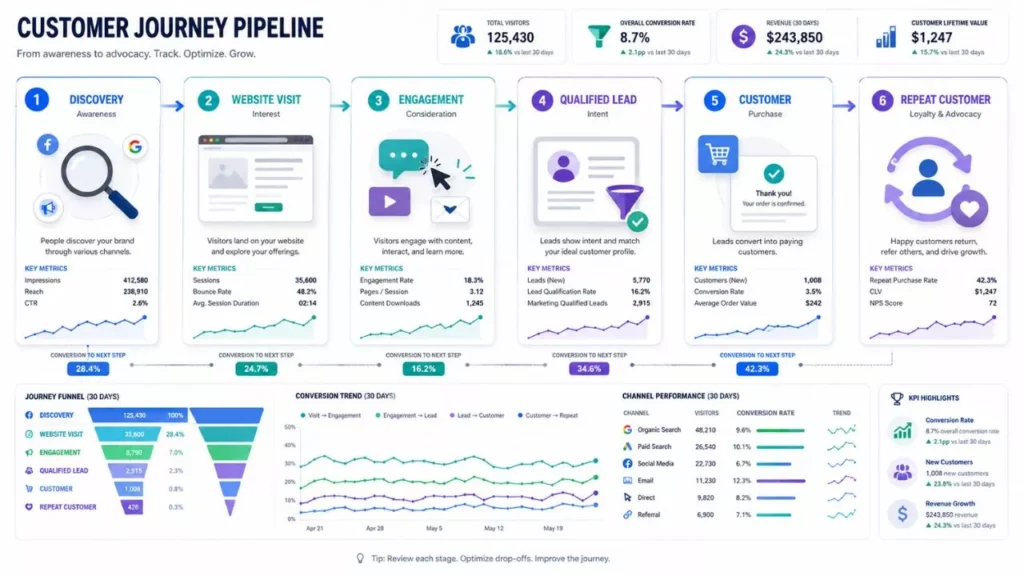
Stages of a Smart Sales Funnel
Understanding the stages of a smart sales funnel is the first step in building an effective strategy. Each stage plays a critical role in moving prospects closer to a purchase, and knowing how to optimize these stages is key to driving conversions.
Awareness Stage:
This is the top of the funnel, where potential customers first become aware of your brand. Your goal at this stage is to attract attention and create interest through content marketing, social media, SEO, and paid ads.
Interest Stage:
Once prospects are aware of your brand, they enter the interest stage. Here, they engage with your content, explore your offerings, and learn more about how you can solve their problems. The focus is on building trust and nurturing leads through valuable content, email sequences, and targeted communications.
Decision Stage:
At the decision stage, prospects are evaluating their options and considering a purchase. This is where you present compelling offers, such as free trials, discounts, or detailed product comparisons, to persuade them to choose your solution over the competition.
Action Stage:
The action stage is where the conversion happens. Whether it’s completing a purchase, signing up for a service, or booking a consultation, your goal is to make this process as seamless and straightforward as possible. This stage is often supported by strong CTAs, optimized checkout processes, and effective sales copy.
By understanding the unique needs and motivations of prospects at each stage, you can design a funnel that effectively guides them through the journey and drives higher conversions.
Creating a High-Converting Sales Funnel
Building a high-converting sales funnel requires careful planning and execution. Each element of the funnel should be optimized to capture leads, nurture them, and convert them into customers. Here’s a step-by-step guide to creating a successful sales funnel:
1. Attract the Right Audience:
The foundation of any successful funnel is attracting the right audience. Use a combination of SEO, content marketing, paid advertising, and social media to drive targeted traffic to your funnel. Create content that addresses your audience’s pain points and positions your brand as a valuable resource.
2. Capture Leads with Compelling Offers:
Once you have traffic, the next step is to capture leads by offering something of value in exchange for their contact information. Lead magnets such as eBooks, webinars, checklists, and free trials are effective tools for this purpose. Ensure that your lead magnet is relevant, valuable, and aligned with the prospect’s needs.
3. Nurture Leads with Engaging Email Sequences:
After capturing leads, it’s crucial to nurture them through a series of targeted emails. Use email sequences to educate, build trust, and guide prospects toward a decision. Personalize your emails based on the prospect’s behavior and interests to keep them engaged and moving through the funnel.
4. Design High-Converting Landing Pages:
Landing pages are critical components of your funnel. They serve as the entry point for your offers and play a key role in converting visitors into leads or customers. Focus on creating clean, compelling landing pages with strong headlines, engaging visuals, and clear CTAs. Use social proof, such as testimonials and reviews, to build credibility.
5. Optimize Calls-to-Action (CTAs):
CTAs are the driving force behind your conversions. Make sure your CTAs are clear, action-oriented, and prominently displayed. Test different wording, colors, and placements to see what works best. A strong CTA can significantly increase your click-through rates and overall funnel performance.
6. Overcome Objections with Persuasive Content:
Addressing objections is a crucial part of the decision stage. Use your content to anticipate and counter common objections, such as price concerns or product fit. Highlight the benefits of your offering, provide guarantees, and use testimonials to reassure prospects that they are making the right choice.
7. Close the Sale and Upsell:
Once a prospect takes action, don’t stop there. Use upselling and cross-selling techniques to maximize your revenue. Offer related products, higher-tier services, or exclusive add-ons that enhance the initial purchase. Follow up with personalized thank-you emails and additional offers to keep the momentum going.
By following these steps, you can create a sales funnel that not only captures leads but also converts them into loyal customers.
Attracting the Right Audience
Attracting the right audience is the first and most critical step in any sales funnel. Without targeted traffic, your funnel will struggle to produce meaningful results. Focus on driving quality traffic that is genuinely interested in what you have to offer.
Effective traffic generation strategies:
- Content Marketing: Create valuable content that addresses your audience’s pain points and positions your brand as an authority. Blog posts, videos, and infographics can drive organic traffic and engage potential customers.
- SEO (Search Engine Optimization): Optimize your website and content for search engines to increase visibility and attract relevant visitors. Focus on keywords that align with the search intent of your target audience.
- Paid Advertising: Use paid ads on platforms like Google, Facebook, and Instagram to reach your ideal audience quickly. Target your ads based on demographics, interests, and behavior to ensure you’re attracting the right prospects.
- Social Media: Leverage social media platforms to engage with your audience, share valuable content, and drive traffic to your funnel. Participate in relevant groups, use hashtags, and create shareable posts that amplify your reach.
Attracting the right audience sets the stage for a successful funnel, ensuring that you’re bringing in prospects who are likely to convert.
Optimizing Lead Magnets
Lead magnets are essential tools for capturing contact information from prospects at the top of the funnel. To be effective, your lead magnet must offer real value and be closely aligned with the needs of your target audience.
Tips for creating irresistible lead magnets:
- Solve a Specific Problem: Your lead magnet should address a common pain point or challenge faced by your audience. Whether it’s a guide, checklist, or template, make sure it provides actionable solutions.
- Keep It Simple and Accessible: Lead magnets should be easy to consume and deliver immediate value. Avoid overly complex or lengthy resources that may overwhelm prospects.
- Visually Appealing: A well-designed lead magnet not only captures attention but also enhances the perceived value of your offer. Use professional layouts, engaging visuals, and clear formatting.
- Test Different Formats: Experiment with various types of lead magnets, such as video tutorials, eBooks, or webinars, to see what resonates best with your audience.
Optimizing your lead magnets ensures that you’re capturing high-quality leads who are genuinely interested in your offerings.
Nurturing Leads with Email Sequences
Once you’ve captured a lead, nurturing them through email sequences is essential to keep them engaged and guide them toward a purchase. A well-crafted email sequence provides value, builds trust, and addresses common objections.
Components of an effective email sequence:
- Welcome Emails: Introduce new leads to your brand, set expectations, and provide initial value. Welcome emails have high open rates, making them an ideal opportunity to make a positive first impression.
- Educational Emails: Offer insights, tips, and resources that help leads understand how your product or service can solve their problems. Educational emails position your brand as an authority and build credibility.
- Engagement Emails: Use engaging content such as case studies, testimonials, and interactive elements to keep leads interested. Highlight real-world success stories to demonstrate the effectiveness of your solutions.
- Sales Emails: Present your offer with a clear call-to-action. Use urgency, limited-time discounts, or bonuses to encourage leads to take the next step.
Email sequences are a powerful tool for guiding prospects through the funnel, maintaining momentum, and driving conversions.
The Role of Landing Pages in Sales Funnels
Landing pages are a critical touchpoint in your sales funnel, serving as the gateway to your offers. An optimized landing page can significantly boost your conversion rates by providing a focused, persuasive experience.
Best practices for high-converting landing pages:
- Clear and Compelling Headlines: Your headline should grab attention and clearly convey the benefit of your offer. It should answer the question, “What’s in it for me?”
- Engaging Visuals: Use images, videos, or graphics that support your message and enhance the overall appeal of the page. Visuals can help communicate complex ideas quickly and keep visitors engaged.
- Concise Copy: Keep your copy concise, benefit-focused, and easy to read. Highlight the key points and use bullet points to make the content scannable.
- Strong CTA: The call-to-action should be bold, clear, and easy to act on. Use action-oriented language and create a sense of urgency to encourage immediate responses.
- Social Proof: Include testimonials, reviews, or trust badges to build credibility and reduce skepticism. Social proof reassures prospects that others have had a positive experience with your offer.
By optimizing your landing pages, you create a streamlined path for prospects to take action, driving higher conversions and better results.
Crafting Compelling Calls-to-Action (CTAs)
CTAs are the linchpin of your sales funnel, guiding prospects toward the next step. A compelling CTA can dramatically impact your conversion rates by making it clear what action the prospect should take.
Strategies to optimize CTAs:
- Be Direct and Specific: Use clear, action-oriented language that tells prospects exactly what to do (e.g., “Download Now,” “Get Your Free Quote,” “Start Your Free Trial”).
- Highlight Benefits: Incorporate benefits into your CTA, such as “Get Access to Exclusive Tips” or “Save 20% Today.”
- Create Urgency: Phrases like “Limited Time Offer” or “Only a Few Spots Left” can motivate prospects to act quickly.
- Test Placement and Design: Experiment with different placements, colors, and designs to see which CTAs perform best. Ensure your CTA button stands out and is easy to click.
Optimizing CTAs is a quick and effective way to boost your funnel’s performance and drive more conversions.
Personalization and Dynamic Content
Personalization is a powerful tool for enhancing the customer experience and increasing conversion rates. By delivering tailored content and offers, you can create a more relevant and engaging journey that resonates with your audience.
How to use personalization in sales funnels:
- Dynamic Content Blocks: Use dynamic content on landing pages and emails that changes based on the user’s profile, behavior, or preferences.
- Behavior-Based Segmentation: Segment your audience based on their actions, such as previous purchases, page visits, or email clicks, and tailor your messaging accordingly.
- Personalized Product Recommendations: Suggest products or services that match the prospect’s interests, enhancing their experience and encouraging them to take action.
Personalization not only improves the effectiveness of your funnel but also strengthens customer loyalty by making each interaction feel unique.
Overcoming Customer Objections
Customer objections are a natural part of the buying process, but they can also be a major barrier to conversions. Addressing these objections proactively within your funnel is essential for easing concerns and motivating prospects to move forward.
Common objections and how to address them:
- Price Concerns: Highlight the value of your offer and compare it to the cost of not taking action. Offering payment plans or money-back guarantees can also reduce price objections.
- Product Fit: Use testimonials, case studies, and detailed product descriptions to demonstrate how your solution meets the prospect’s needs.
- Risk and Trust Issues: Build trust with social proof, secure payment options, and clear policies on returns or cancellations.
By anticipating and addressing objections, you can create a smoother path to conversion and reduce the likelihood of losing prospects along the way.
Upselling and Cross-Selling Tactics
Maximizing revenue from each customer is a key objective of smart sales funnels. Upselling and cross-selling techniques help you increase the average order value by encouraging customers to purchase additional or upgraded products.
Effective upselling and cross-selling strategies:
- Suggest Relevant Add-Ons: Offer complementary products or services that enhance the main purchase. For example, suggest accessories for a purchased gadget.
- Highlight Premium Options: Encourage customers to consider higher-tier versions of a product that offer more features or benefits.
- Time-Limited Offers: Use time-sensitive offers to create urgency and motivate customers to add more to their cart.
These strategies not only boost your revenue but also enhance the customer experience by providing more comprehensive solutions.
Retargeting Strategies
Retargeting is an essential component of any smart sales funnel. It allows you to re-engage prospects who have shown interest but haven’t yet converted, giving you a second chance to close the sale.
Key retargeting tactics:
- Dynamic Ads: Serve personalized ads that feature products or content the prospect has previously viewed, keeping your brand top-of-mind.
- Abandoned Cart Emails: Send automated emails to remind customers of items left in their cart, often with an added incentive like a discount or free shipping.
- Content Retargeting: Use ads that promote valuable content, such as guides or webinars, to bring prospects back into the funnel.
Retargeting keeps your brand visible and encourages prospects to complete the desired action, driving higher conversion rates.
A/B Testing Funnel Elements
A/B testing is a crucial process for optimizing your sales funnel. By testing different variations of funnel elements, you can identify what works best and make data-driven decisions to improve performance.
Elements to A/B test in your funnel:
- Headlines and Copy: Experiment with different headlines, benefits, and calls-to-action to see which versions drive the most engagement.
- Visuals and Design: Test different images, layouts, and color schemes to find the most appealing presentation.
- Offers and Incentives: Compare different lead magnets, discounts, or bonuses to determine which are most effective at capturing and converting leads.
Continuous testing allows you to refine your funnel and keep improving your conversion rates over time.
Measuring Funnel Performance
Tracking the performance of your sales funnel is essential for identifying strengths, weaknesses, and areas for improvement. Key metrics provide insights into how prospects are progressing through the funnel and where adjustments are needed.
Key metrics to monitor:
- Conversion Rate: The percentage of visitors who take the desired action at each stage of the funnel.
- Cost Per Acquisition (CPA): The average cost to acquire a new customer through your funnel.
- Bounce Rate: The percentage of visitors who leave your landing page without taking action, indicating potential issues with the page content or design.
- Lead-to-Customer Rate: The percentage of captured leads that ultimately convert into paying customers.
Analyzing these metrics helps you make informed decisions and continually optimize your funnel for better results.
Avoiding Common Sales Funnel Mistakes
Even well-designed sales funnels can fall victim to common mistakes that hinder performance. Avoiding these pitfalls is key to maintaining a high-converting funnel.
Common mistakes to avoid:
- Lack of Clear Goals: Without defined goals, it’s difficult to measure success or know what to optimize. Set specific conversion targets for each stage of your funnel.
- Ignoring Data and Analytics: Failing to monitor your funnel’s performance means missing out on opportunities for improvement. Use analytics to guide your optimization efforts.
- Overcomplicating the Funnel: A funnel that is too complex or includes unnecessary steps can overwhelm prospects and reduce conversions. Keep your funnel straightforward and focused.
By recognizing and addressing these mistakes, you can create a more efficient and effective sales funnel that drives higher conversions.
Leveraging Social Proof in Sales Funnels
Social proof is one of the most powerful tools for building trust and overcoming objections in your sales funnel. By showcasing the positive experiences of other customers, you can persuade prospects that your product or service is the right choice.
Ways to incorporate social proof:
- Testimonials and Reviews: Highlight quotes from satisfied customers that speak to the benefits and results of your offering.
- Case Studies: Provide detailed stories that demonstrate how your product has helped others achieve their goals.
- User-Generated Content: Feature photos, videos, or social media posts from real customers using your product.
Social proof adds credibility and can significantly increase your funnel’s conversion rates by validating your claims.
Automation in Smart Sales Funnels
Automation is a game-changer for sales funnels, allowing you to streamline processes, maintain consistent communication, and save valuable time. By automating repetitive tasks, you can focus on strategy and optimization.
Automation opportunities in sales funnels:
- Email Workflows: Set up automated email sequences that nurture leads and guide them through the funnel without manual intervention.
- Lead Scoring: Automatically assign scores to leads based on their actions, helping you prioritize high-potential prospects.
- Retargeting Campaigns: Use automated ads to re-engage visitors who have interacted with your brand but haven’t yet converted.
Automation enhances efficiency and ensures that your funnel operates smoothly, maximizing your chances of converting leads.
Integrating CRM with Sales Funnels
Integrating your sales funnel with a Customer Relationship Management (CRM) system is essential for managing leads, tracking interactions, and optimizing your funnel. A CRM allows you to maintain organized, up-to-date records of each prospect’s journey.
Benefits of CRM integration:
- Centralized Data Management: Keep all lead information, interactions, and notes in one place, making it easy to track progress and personalize communication.
- Automated Follow-Ups: Use CRM tools to automate follow-ups, reminders, and notifications, ensuring no lead is overlooked.
- Enhanced Segmentation: Leverage CRM data to create more targeted segments and deliver personalized content that resonates with each prospect.
CRM integration provides the insights and tools needed to fine-tune your funnel and improve overall performance.
Enhancing User Experience in the Funnel
User experience (UX) is a critical factor in the success of any sales funnel. A smooth, intuitive, and enjoyable journey can significantly impact whether a prospect chooses to convert.
Ways to enhance UX in your funnel:
- Mobile Optimization: Ensure that your funnel is fully optimized for mobile devices, with fast load times, clear navigation, and easy-to-tap buttons.
- Simplified Navigation: Avoid clutter and make it easy for prospects to find the information they need at each stage.
- Clear Progress Indicators: Use progress bars, step indicators, or other visual cues to show prospects where they are in the journey, reducing uncertainty.
A positive user experience keeps prospects engaged and increases the likelihood of conversion, making UX a top priority in funnel design.
Scaling Your Sales Funnel
Once you’ve built a successful sales funnel, the next step is to scale it. Scaling involves expanding your reach, refining your processes, and exploring new opportunities to bring in more leads and drive more sales.
Strategies to scale your funnel:
- Expand Traffic Sources: Diversify your traffic channels by exploring new platforms, such as podcasts, influencer partnerships, or paid social ads.
- Optimize Conversion Paths: Continuously test and refine your funnel elements to improve conversion rates at each stage.
- Explore New Markets: Adapt your funnel to cater to different customer segments or expand into new geographic regions to reach a broader audience.
Scaling your funnel allows you to amplify your impact and achieve higher levels of growth and revenue.
Future Trends in Sales Funnels
The landscape of sales funnels is constantly evolving, with new technologies and strategies emerging that offer fresh opportunities for optimization. Staying ahead of these trends can give your business a competitive edge.
Emerging trends in sales funnels:
- AI-Powered Funnels: Artificial intelligence is increasingly being used to personalize content, predict customer behavior, and optimize funnel performance in real time.
- Interactive Funnels: Incorporating interactive elements, such as quizzes, surveys, and dynamic content, can increase engagement and provide deeper insights into customer preferences.
- Omni-Channel Funnels: Future funnels will integrate multiple channels, including email, social media, chatbots, and SMS, to create a seamless and connected customer journey.
By embracing these trends, you can keep your sales funnel cutting-edge, relevant, and highly effective.
FAQs About Smart Sales Funnels
What is a smart sales funnel?
A smart sales funnel is an optimized, data-driven marketing strategy that guides prospects through a structured journey, from initial awareness to conversion, using personalization, automation, and advanced techniques.
How can I increase conversions in my sales funnel?
To increase conversions, focus on optimizing each stage of the funnel, from attracting the right audience to nurturing leads, crafting compelling CTAs, addressing objections, and continuously testing and refining your approach.
What role does automation play in sales funnels?
Automation streamlines processes, such as sending follow-up emails, scoring leads, and managing data, ensuring a consistent and timely customer experience that drives higher conversions.
How can I use personalization in my sales funnel?
Personalization can be implemented through dynamic content, behavior-based segmentation, and personalized recommendations, making each interaction more relevant and engaging for the prospect.
Why is social proof important in a sales funnel?
Social proof, such as testimonials, reviews, and case studies, builds trust and credibility, helping to overcome objections and persuade prospects to take action.
What metrics should I track to measure my sales funnel’s performance?
Key metrics include conversion rate, cost per acquisition (CPA), bounce rate, and lead-to-customer rate, all of which provide insights into your funnel’s effectiveness and areas for improvement.
Conclusion
Leveraging smart sales funnels is the secret to driving higher conversions and maximizing revenue. By understanding the stages of the funnel, optimizing each touchpoint, and using advanced techniques such as personalization, retargeting, and automation, you can create a powerful system that guides prospects from awareness to action. With continuous testing, measurement, and refinement, your sales funnel will not only capture leads but also convert them into loyal customers, fueling the growth of your business. Embrace smart sales funnels and unlock the full potential of your marketing efforts.