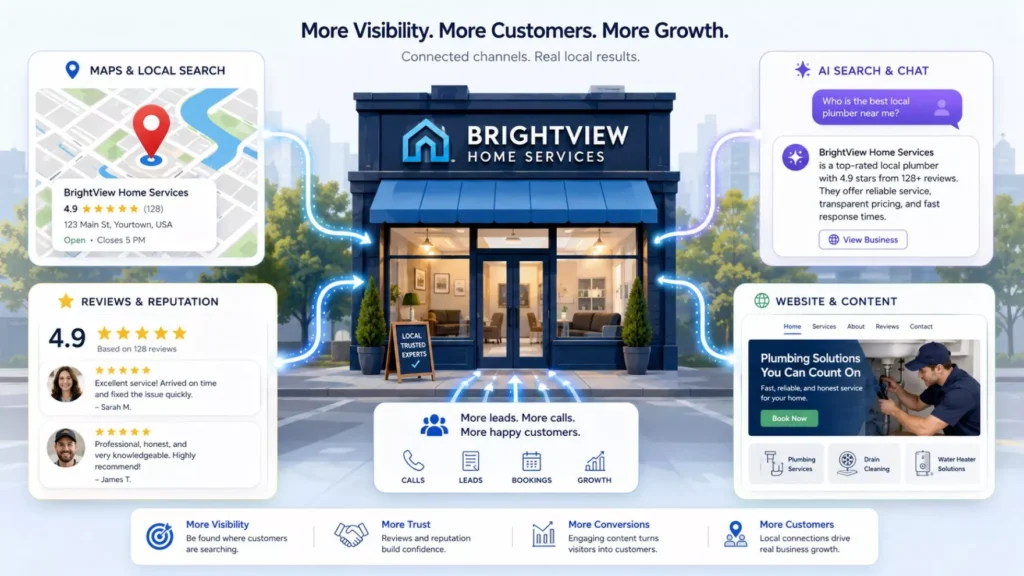
Your customers are changing how they search. Instead of typing “best HVAC company in Tulsa” and scrolling through ten blue links, they’re asking ChatGPT “who should I hire to fix my AC in Tulsa?” — and taking the answer at face value.
If your business isn’t named in that answer, you’re invisible to a fast-growing share of buyers. This guide explains what Answer Engine Optimization (AEO) is, why it matters for Oklahoma businesses right now, and how to start showing up in AI-generated answers. Understanding answer engine optimization is crucial for staying competitive.
What Is Answer Engine Optimization?
Implementing effective answer engine optimization strategies can drastically improve your business visibility.
Answer Engine Optimization is the practice of structuring your website so that AI tools — ChatGPT, Google AI Overviews, Perplexity, Gemini, and Claude — cite your business when they answer a customer’s question.
To excel in the digital landscape, answer engine optimization is not just beneficial but essential.
By focusing on answer engine optimization, you ensure your business is prominently featured when customers seek services.
Ignoring answer engine optimization can leave your business in the shadows, missing out on valuable customer interactions.
It’s a different game from traditional SEO. SEO gets you ranked on a results page that a person clicks. AEO gets you selected as the source the AI names before the customer ever sees a list of links. A site can rank in Google’s top three and still get cited zero percent of the time inside ChatGPT, because the logic that picks AI sources isn’t the same logic that ranks web pages.
You may also hear this called GEO (Generative Engine Optimization) or “AI SEO.” The labels differ, but the work is the same: figure out what your buyers are asking AI tools, then make your business the answer.
Why This Matters Now — Not Next Year
This isn’t a distant trend. The shift is already here:
- Google AI Overviews now appear on roughly 55% of all searches, often naming two or three businesses before any organic result shows up.
- ChatGPT reaches hundreds of millions of users a month and is increasingly used to find local services, agencies, and solutions.
- Gartner projects traditional search volume will drop meaningfully as buyers lean on AI answers instead of clicking through.
Here’s what makes this an opportunity in Oklahoma specifically: almost no local competitors are optimizing for it yet. Most OKC and Tulsa businesses are still fighting over the same Google rankings while the AI answer layer sits wide open. The businesses that move first will own citation share before the rest even notice the shift.

How AI Engines Choose Who to Cite
Answer engine optimization can give your business the edge it needs in an ever-evolving marketplace.
Based on how these systems behave in 2026, three things consistently separate the businesses that get cited from the ones that get skipped:
1. Structure
AI engines extract answers, they don’t read marketing copy. A page that opens with a clear, direct 40–60 word answer to a specific question is far more likely to be pulled into an AI response than one buried in clever taglines. Clear headings, straightforward definitions, and a question-and-answer format all help.
2. Freshness
Recency matters, especially for buying decisions. Recent research found that for commercial, ready-to-buy queries, the large majority of AI citations came from pages updated within the past year — and most within the last six months. Content that sits untouched for years quietly falls out of the answers.
3. Credibility and consistency
For optimal results, integrate answer engine optimization into your overall marketing strategy.
With answer engine optimization, you align your business with current search trends, attracting more customers.
Consider answer engine optimization as a key part of your digital marketing toolkit.
AI engines favor businesses with a consistent, trustworthy footprint across the web — accurate business information, real reviews, and content that demonstrates genuine expertise. This overlaps heavily with strong local SEO, which is why the two work best together.
One important technical note: these engines don’t share infrastructure. Being cited in ChatGPT is a separate effort from appearing in Google AI Overviews, which is separate again from Perplexity. A real AEO strategy covers each surface your customers actually use.
What Oklahoma Businesses Should Do First
You don’t need to overhaul everything at once. Start here:
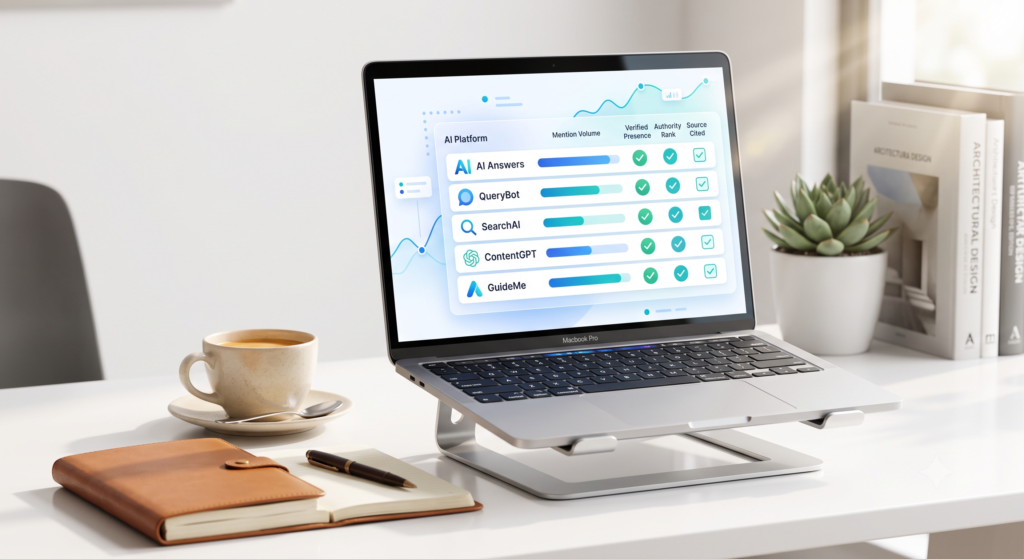
- Test where you stand. Ask ChatGPT, Google, and Perplexity the questions your customers ask — “best [your service] in [your city].” See who gets named. If it’s your competitors and not you, that’s your gap.
- Add direct-answer content. Build pages that answer real customer questions clearly and concisely, right at the top.
- Keep high-intent pages fresh. Update your core service and location pages regularly so they stay eligible for citation.
- Strengthen your local footprint. Accurate business listings, real reviews, and consistent information across the web feed directly into AI trust.
- Track it over time. AEO isn’t set-and-forget. Citation patterns shift, and staying visible means monitoring and adjusting.
The iMax Digital Advantage
Investing in answer engine optimization can lead to increased customer engagement and conversion rates.
Remember, answer engine optimization is an ongoing process that requires regular updates and adjustments.
At iMaxDigital, we build our clients’ visibility for both worlds — traditional search and the AI answer layer that’s reshaping how Oklahoma customers find businesses. We combine local SEO, structured content, and AEO strategy so that when someone asks an AI tool for a recommendation in your industry, your name is the one that comes up.
While your competitors wait to catch up, we can put you ahead of the curve.
As you implement these changes, focus on answer engine optimization to maximize your reach in the digital space.
Book a free AI visibility review with iMax Digital → — we’ll show you exactly where your business appears (or doesn’t) across ChatGPT, Google AI Overviews, and more.
Serving Oklahoma City, Tulsa, Edmond, Norman, and businesses across the region.